Separate Stacks, Sharper Play: The Case for Splitting Your Crypto Between Gaming and Long-Term Holds
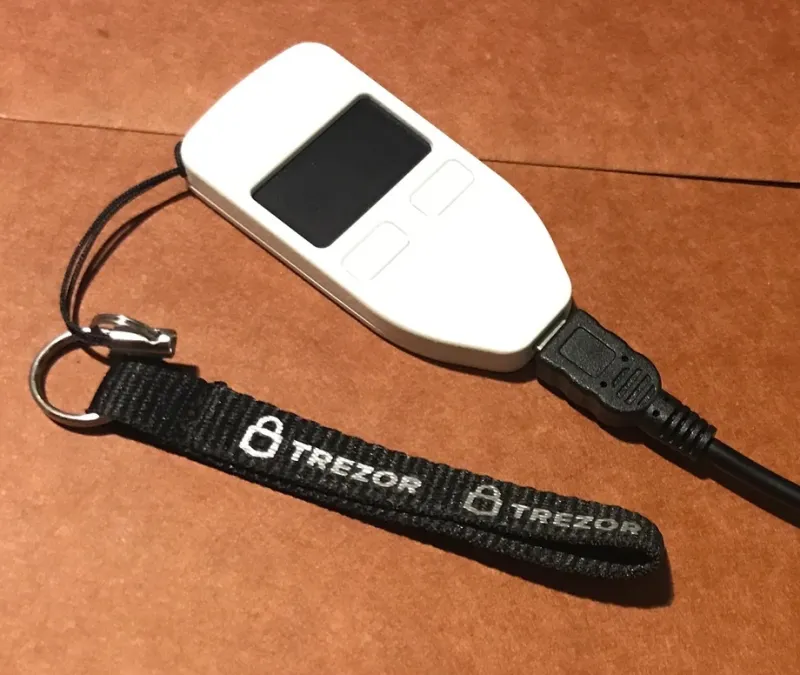
Photo: Sanjev Rajaram, CC BY-SA 4.0, via Wikimedia Commons
Ask any experienced poker player about bankroll management and they will tell you the same thing: never play with money you cannot afford to lose, and never mix your playing funds with your living expenses. It is one of the oldest principles in competitive gaming, and it applies with equal — arguably greater — force in the world of crypto gaming.
Yet a surprising number of active crypto bettors still operate from a single wallet, pulling gaming funds directly from the same address where they hold their long-term Bitcoin or Ethereum positions. The consequences of this approach are rarely catastrophic in the short term, but over time they erode something far more valuable than capital: clarity.
At W88Pro VIP, we have observed a consistent pattern among our highest-performing members. They do not simply manage their bankrolls — they architect them. And the cornerstone of that architecture is the deliberate separation of gaming capital from long-term holdings.
Two Distinct Financial Identities
The first step in understanding why separation matters is recognizing that active gaming funds and long-term crypto holdings are fundamentally different financial instruments, even when denominated in the same asset.
Your long-term Bitcoin position is a store of value. Its performance is measured in months or years. Volatility, within reason, is tolerable — even expected. The emotional relationship you have with that position should be characterized by patience and conviction.
Your gaming bankroll, by contrast, is operational capital. It is subject to frequent movement, partial depletion, and regular replenishment. Its performance is measured in sessions, weeks, and monthly cycles. The emotional relationship here must be disciplined and detached — you need to be willing to deploy it, lose portions of it, and evaluate it without the psychological weight of your long-term wealth sitting in the same account.
When these two financial identities occupy the same wallet, the psychological lines blur. A losing session suddenly feels like a blow to your broader financial security. A winning run creates false confidence that bleeds into your investment decisions. The result is suboptimal performance on both fronts.
The Cold Wallet Commitment
For long-term holdings, cold storage is not optional — it is foundational. Hardware wallets such as Ledger and Trezor provide an air-gapped layer of security that hot wallets and exchange accounts simply cannot match. Assets held in cold storage are inaccessible to exchange hacks, phishing attacks, and the impulsive decisions that tend to emerge during volatile market periods.
This last point is worth dwelling on. The physical inconvenience of accessing a cold wallet is not a bug — it is a feature. When your long-term holdings require deliberate action to access, you are far less likely to make reactive decisions with them. The friction is intentional, and it protects your wealth from your own worst impulses as much as from external threats.
Your gaming capital, meanwhile, lives in a hot wallet or a dedicated exchange account — accessible, liquid, and clearly defined in scope. You know exactly how much is available for play, and you know that moving funds from cold storage to supplement your gaming bankroll is a decision that requires conscious, deliberate effort.
That friction is your first line of psychological defense.
Tax Tracking Made Considerably Simpler
For US-based players, the tax implications of crypto gaming are non-trivial. The IRS treats cryptocurrency as property, meaning every transaction — including gaming wins and losses — may constitute a taxable event. When your gaming activity and long-term holdings share the same wallet, reconstructing accurate cost-basis records at tax time becomes an exercise in frustration.
Separate wallets create separate, clean transaction histories. Your gaming wallet shows deposits, wins, losses, and withdrawals. Your cold storage wallet shows acquisitions and long-term holds. Each tells a distinct story, and both stories are far easier to relay to a tax professional — or to document for your own records — when they are not intertwined.
This clarity has practical value beyond mere convenience. Clean records reduce audit risk, support accurate loss deduction claims, and provide a defensible paper trail should the IRS ever inquire about your activity. In an environment where crypto tax enforcement is intensifying, that defensibility is worth significant peace of mind.
The Psychology of Compartmentalization
Beyond the mechanical benefits, the psychological advantages of separation are profound. High-stakes players who maintain distinct accounts consistently report a cleaner mental state at the table — a quality of focus that is difficult to achieve when every bet feels like it is drawn from a single, undivided pool of wealth.
One W88Pro VIP member, a high-stakes bettor based in Nevada who asked to remain anonymous, described the shift this way: "Before I separated my stacks, I was always half-thinking about my portfolio when I was playing. Every big loss felt like it was eating into my retirement. Once I defined my gaming bankroll as its own thing — funded, capped, and separate — I started playing with a completely different mindset. The games became about strategy, not anxiety."
This sentiment is echoed across the VIP community. Compartmentalization allows players to engage with gaming as a distinct activity governed by its own rules and risk parameters, rather than as an extension of their broader financial life. That cognitive separation tends to produce more rational decision-making, more consistent execution of strategy, and greater resilience in the face of variance.
Establishing the Framework
For players ready to implement this approach, the following structure provides a practical starting point:
Tier One — Cold Storage (Long-Term Holdings): Hardware wallet, accessed infrequently. Contains your Bitcoin, Ethereum, or other long-term positions. Funded through regular contributions from income or profits, never from gaming activity.
Tier Two — Operational Gaming Wallet: A dedicated hot wallet or exchange account funded exclusively for gaming purposes. Establish a maximum balance cap — a figure you are genuinely comfortable losing in its entirety — and treat it as the absolute ceiling for active play.
Tier Three — Profit Extraction Protocol: When your gaming wallet grows beyond a defined threshold, transfer the excess to cold storage. This enforces the discipline of converting gaming wins into long-term wealth rather than simply increasing your bet sizes.
This three-tier architecture keeps your financial ecosystem organized, your records clean, and your psychology intact. It is not a complicated system. But it requires the kind of intentionality that separates elite players from casual ones.
The Discipline Dividend
The players who perform most consistently at the VIP level are rarely those with the most capital. They are the ones who manage what they have with the greatest precision. Separating gaming capital from long-term holdings is one of the most accessible and high-impact steps any serious crypto bettor can take — not because it changes the odds, but because it changes the operator.
At W88Pro VIP, we believe that elite gaming performance is built on infrastructure as much as instinct. The wallets you use, the records you keep, and the boundaries you set are the invisible architecture beneath every winning session. Build that architecture with care, and the results tend to follow.